stamper
Read time:
6 min
Client:
Block Studios LLC
Industry:
Fintech
Start:
July 14, 2025
End:
July 22, 2025
Duration:
4 Weeks

Identifying the Core Problem
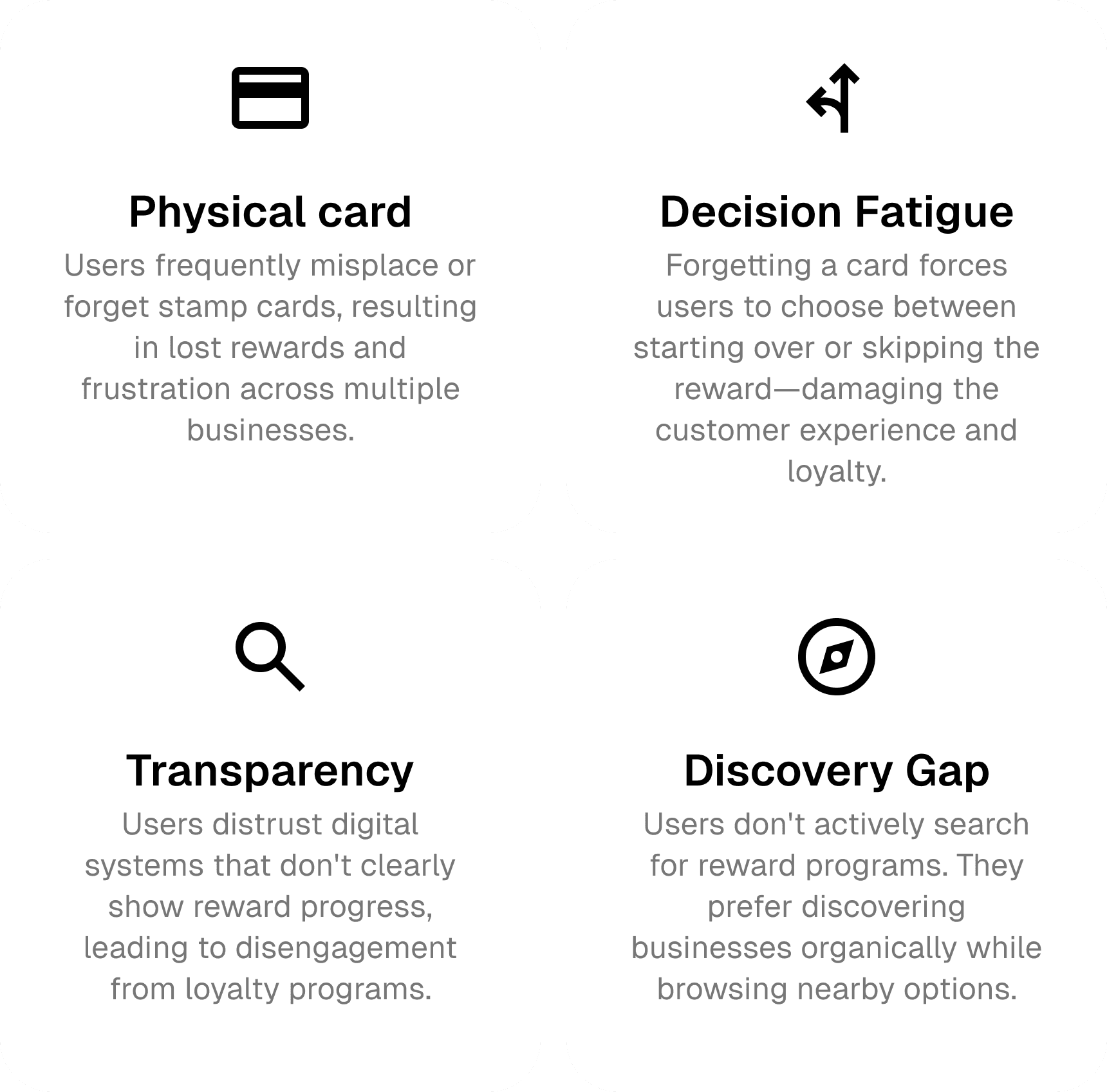
Physical reward cards create friction for both customers and businesses. Users lose cards, forget them at home, and lack transparency in tracking their progress. Meanwhile, small businesses struggle to implement affordable, easy-to-manage digital loyalty programs that drive customer retention.
Research Approach
I conducted qualitative interviews with 15 participants aged 18-45 that included several business owners to identify pain points and validate assumptions about loyalty program behavior.




Competitive Research
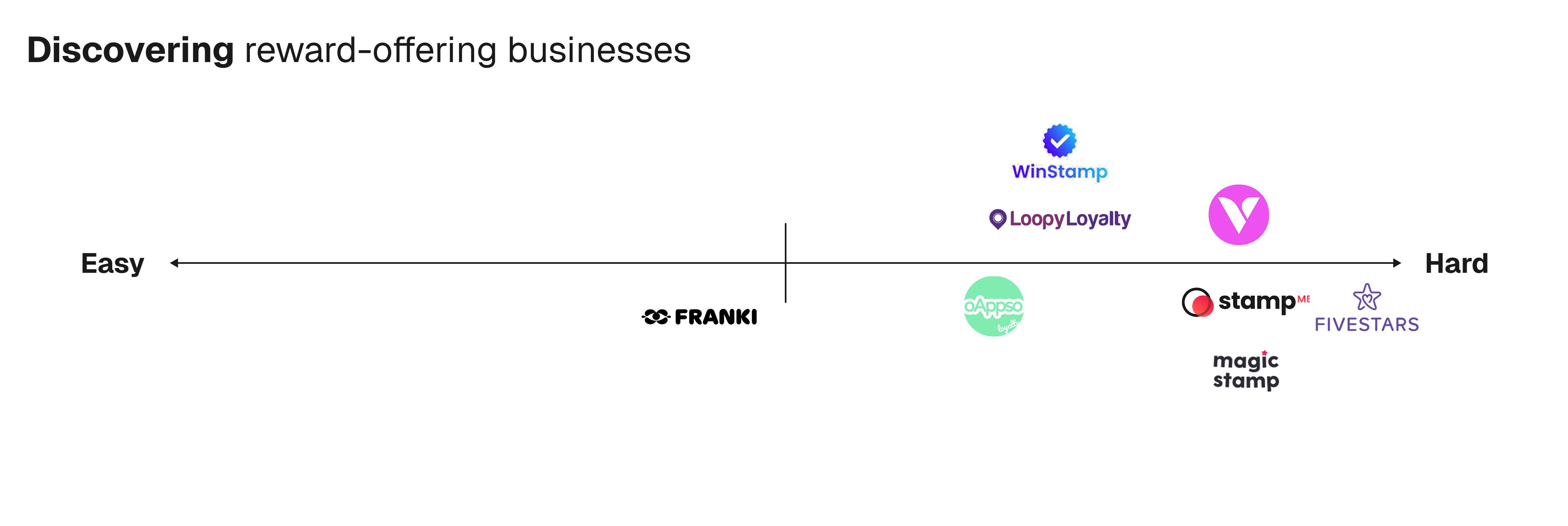
I conducted a competitive analysis of eight loyalty platforms to identify market positioning, feature gaps, and opportunities for differentiation in the rewards space.
Strategic Alignment
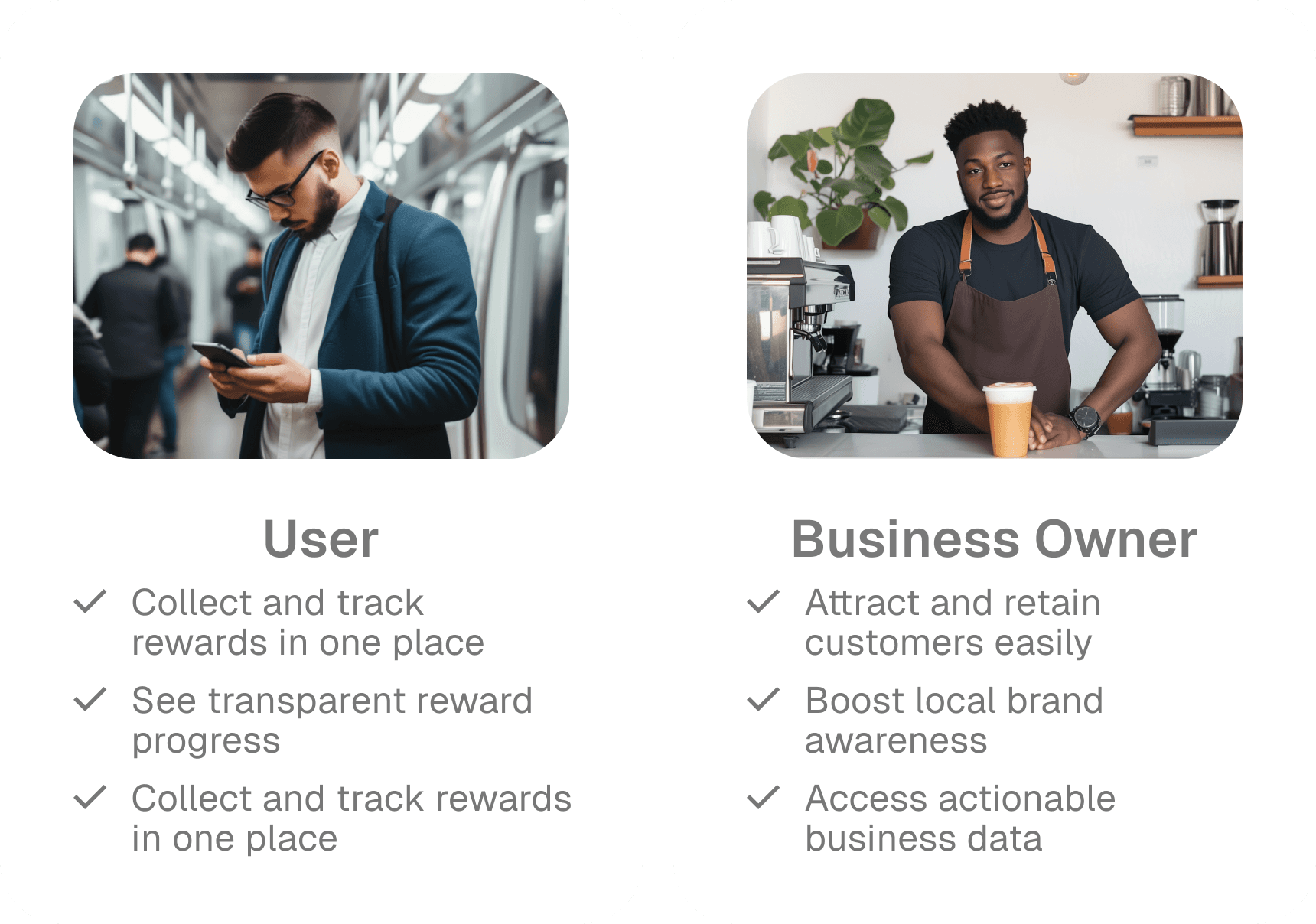
Aligning what users want with what businesses need was essential to creating a platform that works for both sides.


Business Discovery
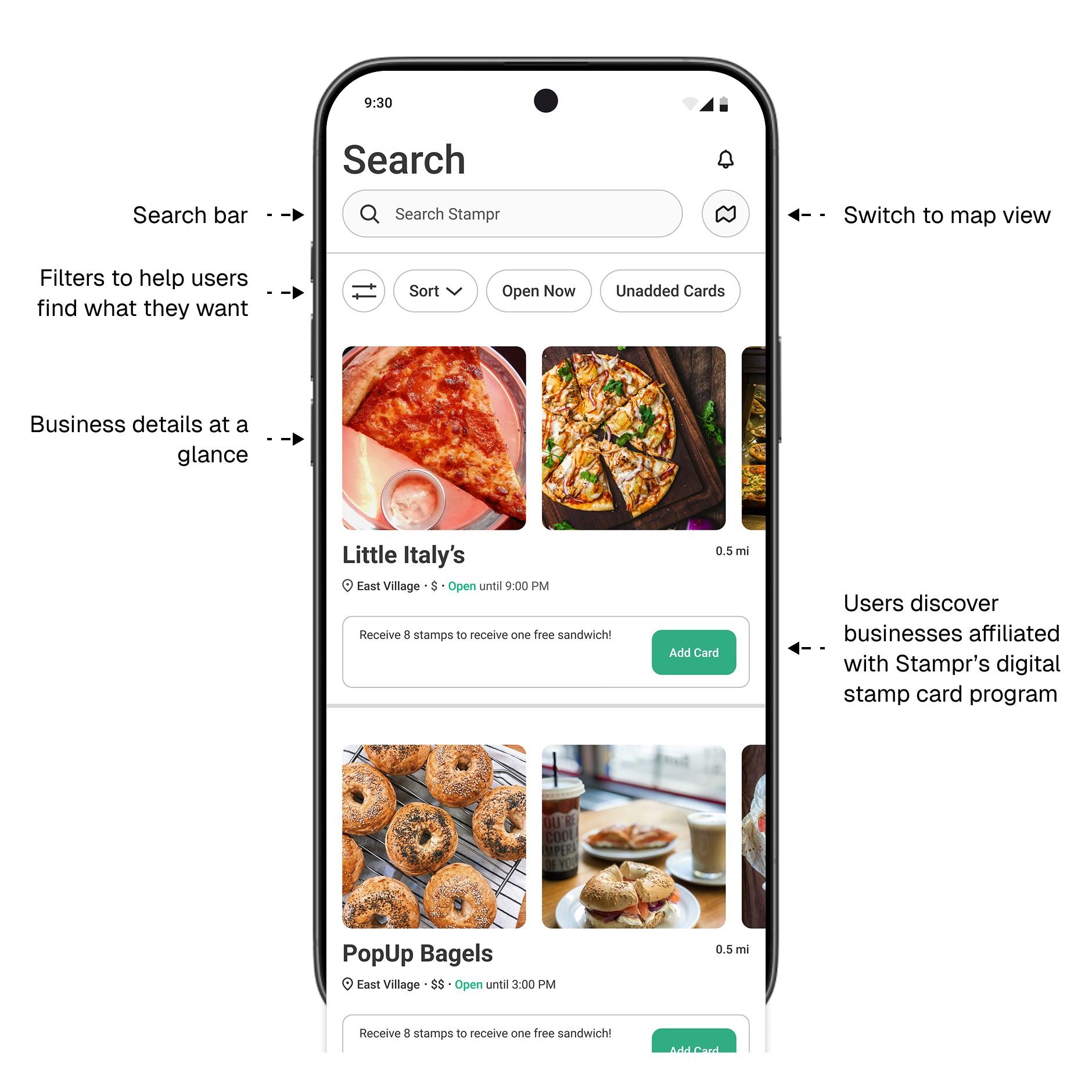
Generic search results don't help users find businesses that match their preferences. I designed advanced search and filter tools that let users refine by business type, distance, and reward preferences. Giving users control reduces decision fatigue and helps them discover businesses aligned with their needs.

Deeper view of a business
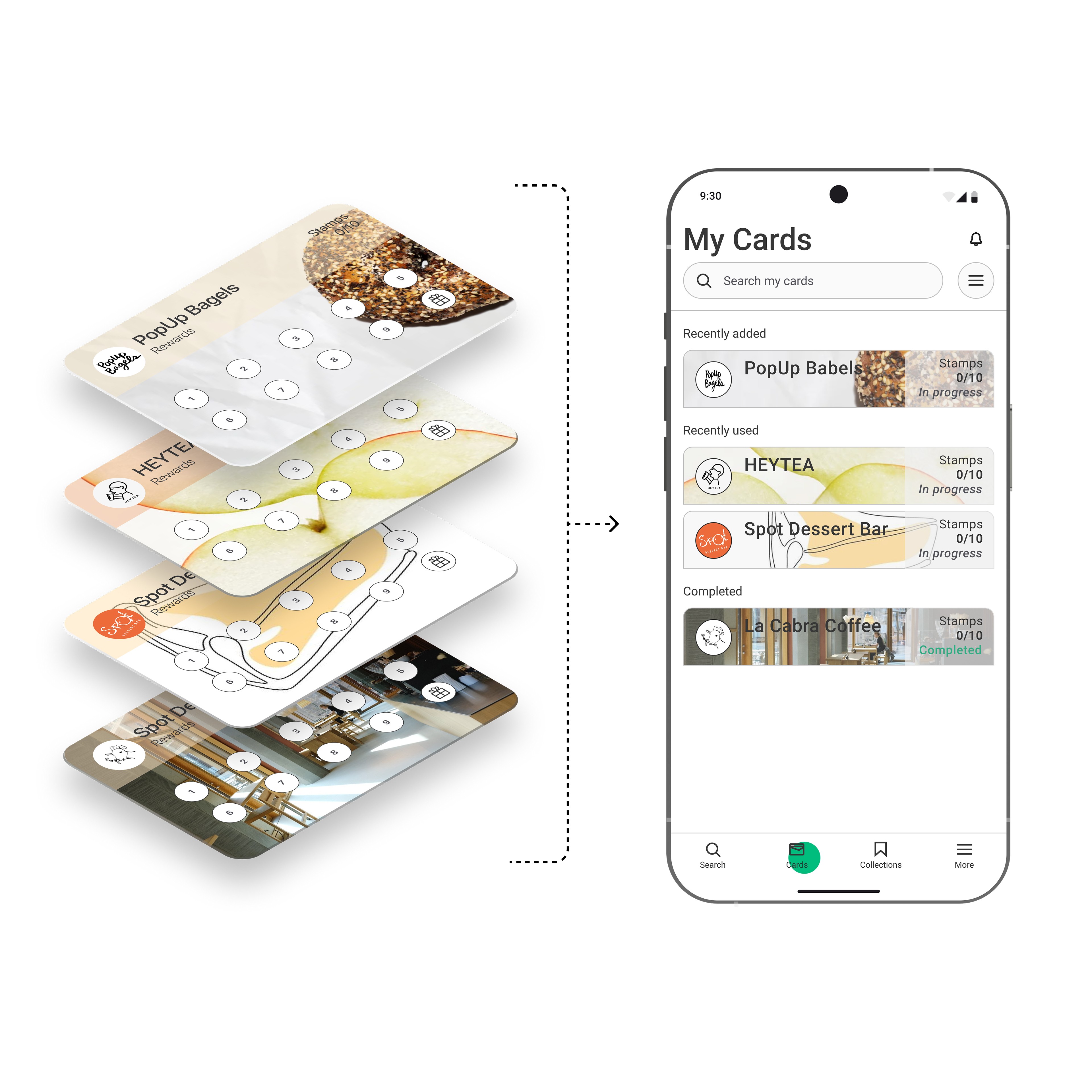
Users can't easily understand a business's reward structure before engaging. Each business profile prioritizes the digital stamp card at the top of the visual hierarchy, followed by location, hours, and key details. Placing the card first ensures users immediately understand the value proposition and reward requirements before committing.

User redeeming rewards
Users don't know when they've earned rewards or how to redeem them. I streamlined the redemption process where users scan after purchase, track progress in real-time, and receive notifications when rewards are ready to claim. This eliminates the guesswork of "Did I get my stamp?" and makes everything transparent and automatic.

Business Owner scanning card
Business owners need a solution that works for multiple employees and locations. I designed the scanning functionality to be accessible to all employees, where multiple team members can download the app and scan customer cards instantly. This makes implementation scalable for businesses with several team members or multiple locations, reducing barriers to adoption.

Enrolling to Business
Business owners can enroll by clicking "Have a business?" and completing a simple setup flow. I prioritized speed and clarity to reduce barriers to adoption.
Control over reward card
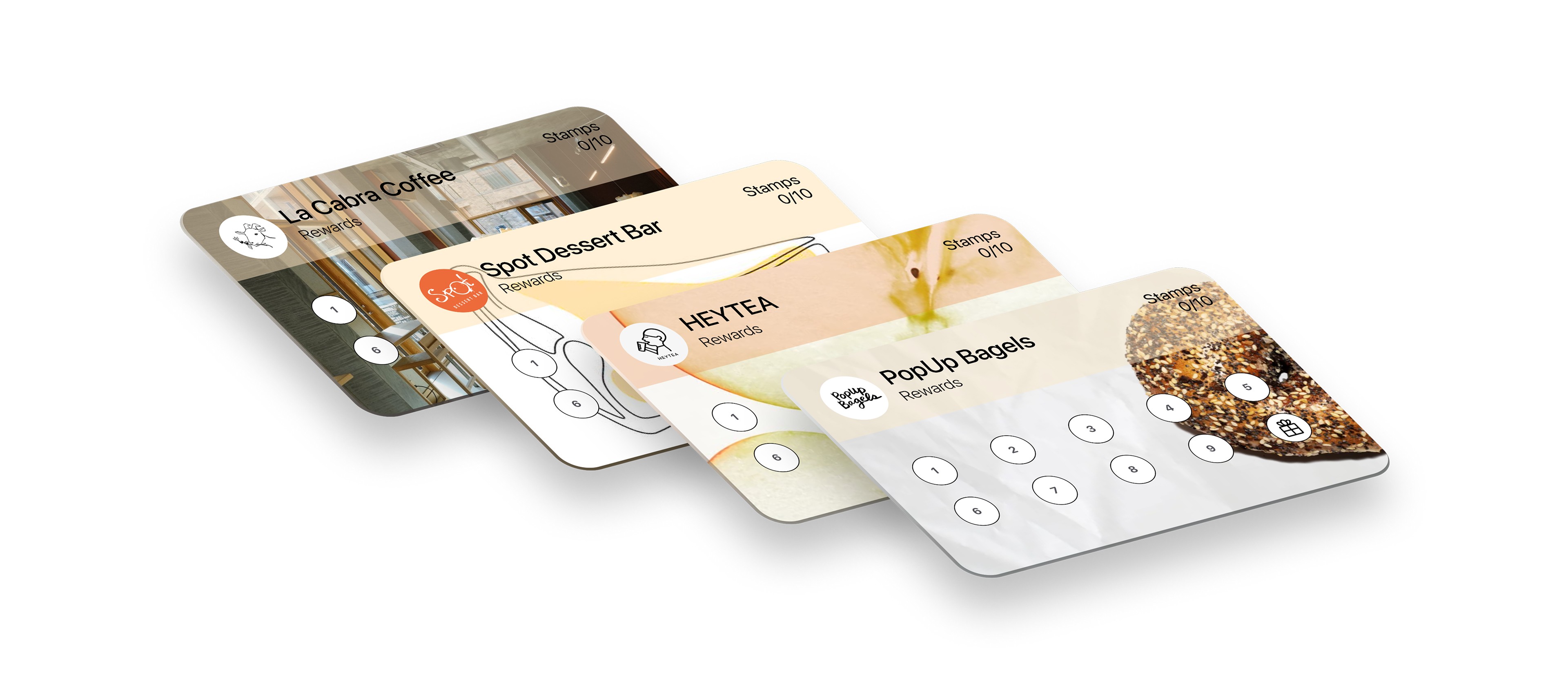
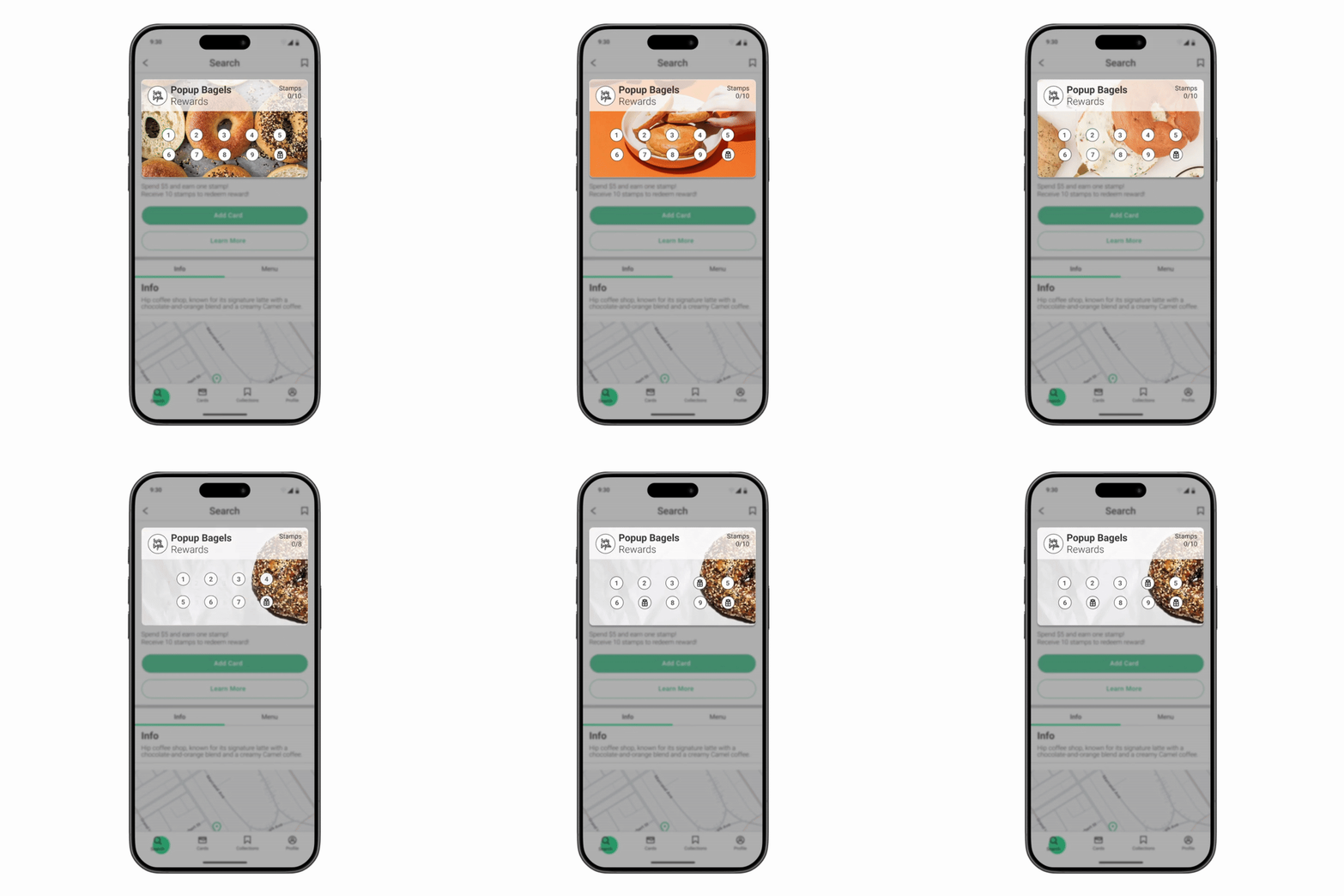
Businesses can customize their digital stamp cards background and logo. They also have control over the number of stamps on a card and how many rewards are given and when.

Stamp value
Balancing business profitability with customer value was key. I designed a flexible stamp system where businesses set their own spending thresholds—like $5 spent equals one stamp. This gives merchants control over their margins while keeping the experience simple and rewarding for customers.

Publishing Page
Once published, business pages go live immediately, but owners can edit any section to make changes or updates as their business evolves. This balances speed to market with flexibility so businesses can iterate without starting over.
Analytics
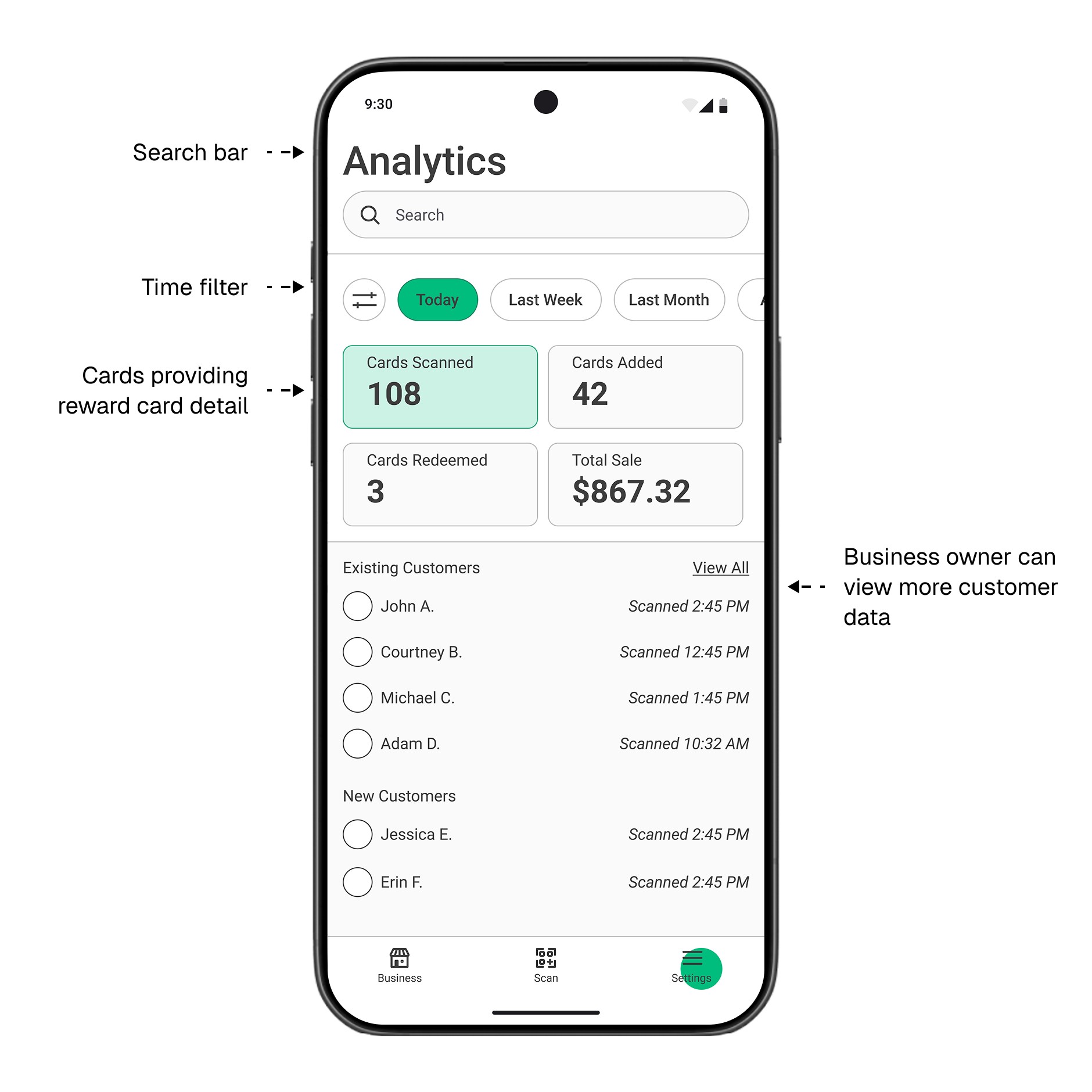
I designed a dashboard that surfaces key metrics—cards issued, active users, stamps redeemed, and revenue impact—so business owners can track engagement over time. This transparency into program performance helps businesses make data-driven decisions and optimize their rewards strategy.

Multiple Businesses
I created a business switcher in the owner profile that lets users manage multiple businesses from one account, each with independent analytics, card designs, and settings. This reduces friction for multi-business owners and scales with their growth.
Key Takeaway
The biggest Key Takeaway from this project was knowing when to simplify. Early designs tried to pack in too many features, which actually made the experience harder to navigate. User testing showed me that people just wanted their stamp cards to work—no fuss, no confusion.
I learned that transparency isn't just about showing data; it's about building trust. When users could see their exact progress and businesses could track real metrics, both sides felt more confident in the system.
If I could do it again, I'd spend more time on the business onboarding flow earlier. Getting businesses onto the platform quickly turned out to be just as important as the user experience—without businesses, there's no ecosystem.